“The cars and motorbikes believe that they have priority. They drive in the race without paying attention to the riders. We are the principal actors but we get less and less respect…On small roads like that that car could have waited before going past.” Sandy Casar, FDJ team
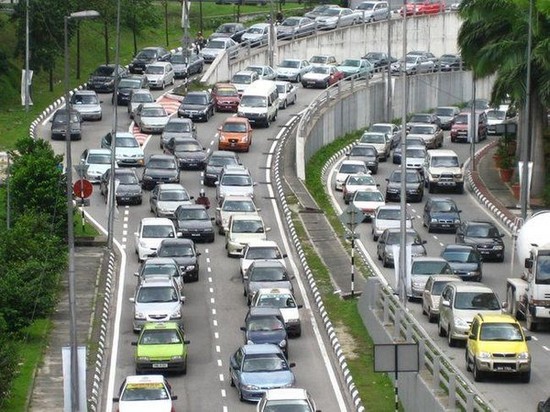
The M74 Extension in Glasgow opens to cars and trucks at the end of June. Yesterday, cyclists, runners, wheelchair users and walkers were given early access to a five mile stretch of urban motorway that cost a mind-numbing £672m. Naturally, the motorway - built to ease congestion in a city already over-run with elevated carriageways - will soon fill with traffic and within a few years there will be calls for a bypass of the bottlenecks. And so it goes on.
Induced demand is a well-known phenomenon in road transport. But how come the demand inducing is always so car-centric? Why don’t the UK governments build a stonking great bike path network throughout the land and watch as that fills up with ‘build it and they will come’ riders? Why spend £672m on such a short stretch of road when the money could have gone on a transport network that is beneficial to the economy, to health and to peoples’ waistlines?
Because there’s always plenty of money for motorists, and White Elephants cost a lot to feed. This is unsustainable long-term but politicians have yet to wake up to the realities of Peak Oil and Peak Car.
Transport Scotland believe the motorway will “produce immediate benefits by removing traffic from the M8, taking approximately 20,000 vehicles per day off the M8…” and “improve journey times across and through Glasgow with 5 – 10 minutes being saved per journey in peak hours.”
Such time savings are amazingly low yet this sort of stat is wheeled out for every major road building project, and invariably the time savings are quickly absorbed as more and more motorists take up the slack.
So, if building more and more motorways is no answer to congestion, and if I’m clearly no huge fan of spending astronomical amounts of tax-payers money for such small gains, why did I travel to Glasgow from Newcastle (on the train, natch) to ride on the M74 Bike ‘n’ Hike Day?
Maybe lots of locals were treating this as fun ride but, for me, it was a form of wheels-on-the-ground protest.
I’m no Swampy, I’m not going to burrow underground, chain myself to a JCB, or belay off a tree. However, I can join 6000+ cyclists in an official Critical Mass (we paid £5 to be part of ride, with the money going to charity) and claim the M74, if only for a day.
Bike paths ought to be constructed to this sort of quality. The tarmac is super-smooth, perfect for cycling. Bike paths ought to be built wide, too, not the poxy slivers we get foisted with.
As a British tax-payer I help pay for motorways so it’s good to get the chance to ride on one, to see close-up how my money is being spent.
And it’s not being spent very wisely.
Read the rest of "Why did I ride my bicycle on a motorway?"...
This is a mesmerising video of a Glasgow commute by helmetcam cyclist It’s 10+ minutes of a cyclist filtering through what appears to be miles of gridlocked cars, vans and HGVs. The hypnotic music and dream-like footage makes for an arresting short.
It’s easy to skip through after watching the first minute or so but treat it like an art film and watch until the end. There’s no twist in the tale, no set-up for a sequel, it’s just ten minutes of freedom, filtered.
Now, there are some who would view this film as video nasty because it shows a ‘vehicular cyclist’ mixing it with fast-moving motorised vehicles. Except they’re not fast-moving, they’re slow at best, static at worst.
Personally, such a daily commute in a car, would be my version of Hell.
The bike commute looks hairy at times and, clearly, it would be so much better if cyclists had big wide lanes of their own. But, in Glasgow, as with much of the UK, such lanes will be a while coming.
The video won’t attract anybody to cycling. In its own way it’s as extreme as a Danny MacAskill video. But as an example of the Tragedy of the Commons, it’s perfect. When everybody wants to use the road at the same time, and in big motorised contraptions that take up a lot of room, and often for just one person, gridlock is the result.
Our cities will see more and more gridlock over the coming years. Congestion costs, and the answer is not more and bigger roads. One of the answers is the construction of bike paths, for those not daft enough, or confident enough, to ride next to cars, vans and trucks. For those who are confident enough (and I’m certainly daft enough), we have to make sure we always keep our right to ride on roads, too. Even busy ones, should we so choose.
* The car-on-stilts trick wouldn’t be an effective long-term solution to gridlock. As pointed out by “that’s not going to help when you come up behind another stilted car:-)”
Read the rest of "Drivers: if your car wheels were on stilts you could do this too*"...
Cyclist always ride on pavements, hey? There are now so many cars parked on pavements there’s precious little room for us to ride on them.
Cars lord it over roads and want dominion over pavements, too.
It shouldn’t be this way. Minister for cycling, walking and local transport Stormin’ Norman recently gave local councils greater leeway to but there’s little evidence motormyopiac councils have any intention of using their powers.
A Department for Transport press release from February said:
Vehicles parked on pavements can cause particular problems for people in wheelchairs or with visual impairments and those with pushchairs. The Minister has today written to councils prompting them to use their powers to prevent parking on the pavement where it is a problem.
The Department for Transport has given all councils in England permission to use signs to indicate a local pavement parking ban. Until now councils have had to gain special signs authorisation from Government each time they want to put a pavement parking ban in place.
While in some circumstances pavement parking is unavoidable - for example in narrow residential roads with no off-street parking - the Government believes that in many cases it can be avoided. Pavement parking is completely banned in London.
Now, discounting the statements “where it is a problem” (it is a problem everywhere) and “in some circumstances pavement parking is unavoidable” (no, it’s not, shift the parking elsewhere, that’s what powers-that-be can do, they have, you know, power) it has to be said that Normie gets it spot on when he says:
“Parking on the pavement can be selfish and dangerous… If a vehicle is blocking the pavement then people often have no choice but to walk in the road where they are at much greater risk of being involved in an accident. [Norm - this is no accident].
“Most drivers are considerate and do not park on the pavement unless it is permitted or necessary. However, there is a selfish minority who do not use their common sense and dump their cars wherever it suits them without a second thought for others.
But selfish minority? Nope. Pavement parking is totally and utterly endemic, hardwired into a significant number of UK drivers, possibly even the majority. The justification? “I’m getting my static car out of the way of moving cars” and “I don’t want those moving cars to hit my static car.”
Well, just tough luck, go find a multi-storey car park or a road where you’re not causing an obstruction. Road too narrow so you have to park on the pavement? Again, find another road.
Unbelievably, even though cyclists are not allowed to ride on pavements, cars are not normally disobeying any laws when they park on them (footway parking bans are applied locally and have to be accompanied by signs, there’s no national ban on pavement parking). The offence is driving on the footway, but if the police don’t see the driver committing the offence the driver can’t be nabbed for leaving a car on the pedestrian’s part of the highway.
Thing is, motorists want cyclists to get off “their roads” and on to pavements, which is never the best place for cyclists. Here’s a interesting concept from ‘KeepCalm’, submitted to a pre-election ideas farm created by the Torygraph:
+++++++++++++++++
Pedestrians and cyclists can mix at slow speeds but at anything above 10mph cyclists can pose quite a hazard, even though we’re nimble, and think we can dip and dodge around. We very possibly can but only if pedestrians stick to the straight and narrow, which is not standard practice and nor should it be.
The headline at the top of my blog posting is an old joke, and probably dates to when the first road safety posters used the ‘Keep death off the roads’ message.
The ‘Keep death off the roads’ graphics inserted into the pix above and below date from the 1930s and 1940s.
In 1945, the UK Government worried at the carnage on the roads - but not so worried it ever truly chastised motorists - put out this animated short via the Ministry of Information, Keep Death off the Roads.
It’s typical of its time because it blamed the victim rather than tried to slow the motorist (see, nothing changes).
Mrs Smith walks out on to a road with a shopping bag and is nearly sliced in half by a speeding driver. There’s no admonishing of the driver, just the pedestrian.
“Look out there! That lovely meal she was dreaming of cooking for the family is gone, but she was very lucky not to have been injured. Do remember: crossing a road needs all your concentration and care.”
Later in the short, a child - Johnny - is mocked for playing in the road when he could have been playing on the pavement or a playground. A cyclist is mocked for riding no-handed and then running into the child.
“A bicycle isn’t at all under control when ridden freehand. What would you do in an emergency? You see - the unexpected does happen, and you are just as much to blame as Johnny.”
Quite right, but why isn’t the motorist ticked off too?
There’s a chance in the next frame. A guy getting off a bus, doesn’t look, and gets squished by a speeding car. Speeding motorist is ticked off this time? ‘Course not, it’s wholly the pedestrian’s fault:
“The bus was late and now you’re in a hurry. A look to the right and a look to the left takes only two seconds more. But now it will be some weeks before you can attend to the urgent business.”
So, it appears that pedestrians will survive if they look out for speeding motorists when crossing roads and, really, should stick to the pavements and not cross at all.
But, fast forward to today, amd pedestrians are not safe on pavements, either. 40 or so pedestrians are killed on footways or verges each year (up to 400 are killed on roads each year). By motorists.
Despite this clear and present danger, the Conservative MP Andrea Leadsom wants the law brought up to date to make sure cyclists who kill pedestrians can be charged with the offence of ‘death by dangerous cycling’. Cyclists killing pedestrians is an extremely rare event, in some years there are no fatalities at all and when pedestrians are killed by cyclists it tends to be after cyclists hit pedestrians on roads.
In two recent cases when cyclists hit and killed pedestrians, the cyclists were jailed (motorists often get off scot free). Leadsom’s ten minute rule bill is classic ‘why behold you the mote that is in your brother’s eye, but consider not the beam’. She would be better off trying to get her colleagues to change the law on pavement parking. That would make a real difference to road safety.
Or perhaps seek to beef up laws against motorists who kill? It sounds as though this MP doesn’t read what happens in court cases where dangerous motoring is in the dock. She told her local paper:
“Imagine if a motorist had mounted the pavement and killed a school girl as she chatted to her friends. The motorist would have felt the full force of the law and there would have been a national outcry if such a person had walked away with a £2,000 fine.”
Read the rest of "KEEP DEATH OFF THE ROADS…
Drive on the pavement"...
In December 2009, for CNBC European Business magazine, I was one of twelve writers to pen a prediction for ‘50 Things That Will Change Your World in 2010′. I plumped for ‘personal CCTV’, including bike-cams and in-car ‘bad driving’ monitoring units.
Here’s what I wrote:
GEORGE ORWELL might have predicted our surveillance-obsessed Big Brother society but he didn’t foresee the rise of personal CCTV: citizens watching each other. Getting short shrift from a car rental clerk? Watch the smiles break out when you threaten to YouTube the grimaces direct from your mobile phone.
On the road, a more practical use for the mobile video camera is emerging: the post-crash eyewitness. To record SMIDSY (sorry mate, I didn’t see you) collisions, hands-free video cameras are being fitted to motorbikes and bicycles. China’s Muvi Micro DV Cam is just 55mm tall, has a resolution of 640 x 480 pixels, and is only €100. The X170 helmet-cam from the UK’s Drift Innovations is twice the size and price but shoots 720 x 480 pixels and sports a tiny LCD screen for instant playback of roadside transgressions.
In automobiles, the technology has gone a step further, recording performance parameters before, during and after an accident. Around 120,000 cars in the US and South Africa are already fitted with a Total Event Data Recording system from DriveCam, which costs €1,500 a year and involves “driver coaching”. Around €1,100 cheaper, the Roadhawk camera fits behind the rearview mirror and, with its GPS chip, logs speed, position, direction and G-force. Crash reports can be generated with video embeds and mapped in Google Earth. Already widely fitted, ‘black box’ cameras could become compulsory for fleet operators as they improve driver behaviour, reduce insurance costs and, as careful motoring equals frugal motoring, save on fuel bills.
Bike cams are certainly proving useful although convictions after recordings of bad driving incidents remain thin on the ground. It’s possible (just a smidgen, anyway) that some motorists now think twice before accosting cyclists, especially after the BBC reported some cyclists are now sporting evidence gathering cameras.
But I believe the biggest jump in road safety will come when motorists have to have cameras fitted. The Roadhawk-style cameras mentioned above are now widely used in the US, fitted to commercial vehicles. Some parents also make their teen offspring drive with such cams.
Now, in the the UK, the Co-operative has launched a Young Driver insurance package, with reduced premiums for those new drivers who can prove they’re not as suicidal and crazy as their peers. To qualify, a young driver has to have a ‘Smartbox’ fitted in his or her car. This isn’t a camera but it measures safe driving techniques and transmits data to a monitoring station.
This ‘pay how you drive’ solution is for 17 to 25 year olds and was launched on March 16th. The Smartbox uses iPhone-style accelerometers and GPS chips to work out whether the driver is braking too suddenly, accelerating too aggressively, cornering at speed, and just plain speeding. Sadly, it can’t yet measure whether a teen is texting and driving so the tech is missing a key feature.
David Neave, Director of General Insurance at The Co-operative Insurance, said:
“The new ‘pay how you drive’ product will help make the UK’s roads safer by giving drivers a genuine insight into their driving behaviours…For the first time in UK Insurance history young drivers will be rewarded for safer driving and their driving assessed every 90 days based on the four driving behaviours. If responsible driving behaviours are demonstrated they will receive a Safer Driving Discount…However, if a policyholder consistently drives badly, for example repeatedly breaking speed limits or taking corners too sharply, then their insurance premium could increase by 15% of the initial policy price.”
The Smartbox allows customers to log into an online ‘Driving Dashboard’ to see how their driving has been rated against the four driving behaviours. It also gives advice on what they can do to improve. Each behaviour is illustrated by a speed dial and drivers will be rated on a green (good driving), amber (generally good but showing some bad behaviours) and red (bad driving).
Neave: “The Co-operative Insurance is committed to young drivers and improving the safety of the UK’s roads. We believe that by giving young drivers the opportunity to log into their individual Driving Dashboard to see how their driving is rated and to access safe driving tips will act as an educative tool and a deterrent against driving badly, which can only be a positive for road users and pedestrians across the UK.” [And cyclists].
The fitting of ‘good driving’ technology is welcome news. It would be great for similar tech to be fitted in all cars but at a bare minimum it should be fitted in every car where the motorist has committed any sort of driving offence. There’s no need to fret about curtailment of ‘freedom’ because if motorists didn’t speed, didn’t drive aggressively and didn’t do all the things they now hardly ever get chastised for, they wouldn’t trigger the Smartbox.
Read the rest of "Every Car Needs One: a GPS ‘naughty step’"...
In its Victorian heyday the satirical magazine Punch (1841-2002) poked fun at bicyclists and automobilists: both were guilty of “scorching” (speeding) and both ignored the prior road rights of pedestrians.
However, by the 1920s, ‘Motor Mania’ had seen to it that the Middle Class had become the Motoring Class, and Mr Punch - ie the writers and cartoonists on the magazine - had become “himself an enthusiast of the whirling wheel.” By the 1940s, cars had killed so many people, J. S. Dean wrote his famous pro-pedestrian tract, Murder Most Foul.
It made little difference. Road deaths had become acceptable to British society.
The rights of the motorist trumped all other rights. This ‘Motor Ascendancy’, before it became the norm, had been mocked by Punch. It’s fascinating to read volumes of Punch and see this transformation: from cars as killers and usurper of rights, motorists as “motor fiends”; to motorists as rightful “owners of the road”, immune to any charges of death on the streets.
There are some illuminating cartoons and poems from the Victorian and Edwardian periods of Punch which show how the coming of the motorcar was feared. “Road hogs”, a term first ascribed to cyclists, was switched to describing motorists. A car, to the editor of Punch in 1907, was “an ingenious device for public slaughter”.
This is prescient. Today, if you want to kill with impunity, assassinate your target with a car and you’ll get little more than a slapped wrist. Only an idiot would choose to murder with a gun or a knife.
THE MOTOCRAT (1905)
I am he: goggled and unashamed. Furred also am I, stop-watched and horse-powerful. Millions admit my sway—on both sides of the road. The Plutocrat has money: I have motors. The Democrat has the rates; so have I—two—one for use and one for County Courts. The Autocrat is dead, but I, I increase and multiply. I have taken his place.
I blow my horn and the people scatter. I stand still and everything trembles. I move and kill dogs. I skid and chickens die. I pass swiftly from place to place, and horses bolt in dust storms which cover the land. I make the dust storms. For I am Omnipotent; I make everything. I make dust, I make smell, I make noise. And I go forward, ever forward, and pass through or over almost everything. “Over or Through” is my motto.
The roads were made for me; years ago they were made. Wise rulers saw me coming and made roads. Now that I am come, they go on making roads—making them up. For I break things. Roads I break and Rules of the Road. Statutory limits were made for me. I break them. I break the dull silence of the country. Sometimes I break down, and thousands flock round me, so that I dislocate the traffic. But I am the Traffic.
I am I and She is She – the rest get out of the way. Truly, the hand which rules the motor rocks the world.
MOTOR QUESTIONS (1903)
What rushes through the crowded street
With whirring noise and throbbing beat,
Exhaling odours far from sweet?
The motor-car.
Whose wheels o’er greasy asphalte skim,
Exacting toll of life and limb,
(What is a corpse or so to him)?
The motorist’s.
Who flies before the oily gust
Wafted his way through whirling dust,
And hopes the beastly thing will bust?
The pedestrian.
Who thinks that it is scarcely fair
To have to pay for road repair
While sudden death lies lurking there?
The ratepayer.
Who as the car goes whizzing past
At such law-breaking stands aghast,
(For forty miles an hour is fast)?
The policeman.
Who hears the case with bland surprise,
And over human frailty sighs,
The while he reads between the lies?
The magistrate.
Read the rest of "Definition of ‘car’, 1907: “an ingenious device for public slaughter”"...
Scare them silly. Shoot a horror movie that’s meant to shock them into being safer on bikes (wear a magic hat, bike helmets protect your head when you’re hit by a speeding car) and how not to cross the road (listen to an iPod, get squashed, it’s your own stupid fault).
This is the gist of the Ghost Street campaign. I’m sorry to say this web campaign, and the DVD for schools that goes with it, is from my neck of the woods. What were they thinking? ‘They’ being Newcastle City Council. Why create a website riddled with victim-blaming material backed up with no evidence?
+++++++++++++++++
UPDATE [10th March 2011]: Newcastle City Council has now taken down the badly-researched material on the Ghost Streets website and replaced it with…nothing. The site is now password protected, and the links in this piece no longer work.
I now have the Freedom of Information request info so can report the video cost £12,000 to produce, with 100 DVDs sent out to schools.
Dene Films got the cash. This outfit is top-notch and would probably normally charge much more than this for a film of this quality. The editing, the graphics, everything about the film, was high-quality but the website was awful. The thrust of the campaign might have been to shock kids into paying more attention on the roads, but the most likely outcome would be that kids would want to get behind the “protection” afforded by cars as soon as possible.
Newcastle City Council said the film’s genre and plot was suggested by kids. This appears not to be the case. According to a promo video by Dene Films, the horror scenario was suggested by Dene Films. Chris Chapman, writer and producer at Dene Films said: “It wasn’t going to be horror it was going to be a talking heads documentary… We knew we wanted to pitch a drama. We knew we wanted to tell a story that was gruesome.”
from on .
+++++++++++++++++
“Traffic is the biggest cause of accidental death of 12 to 16-year-olds.”
No, traffic is not a killer, it’s speeding, inattentive motorists that do the killing. And let’s get rid of this word: “accidental”. Instead of “accident”, use “incident” or “crash”. 99 per cent of road deaths are avoidable. It’s not an “accident” when motorists speed along urban roads at many MPH above posted limits. It’s not an “accident” when motorists overtake in stupid places or miscalculate gaps.
“Research has found that teenagers are easily distracted on the roads.”
Sure they are. And they need to be made more aware of the potential danger of such inattention. But the Ghost Street campaign will have one major result: it will make teens want to drive, to be “protected”.
The imagery for the campaign is illuminating. The markings for the dead body image - above - are on a pavement. Motorists don’t just kill kids on the roads, they kill them on pavements, too. No amount of pedestrians “paying attention” and wearing light-coloured clothing will prevent drivers from mounting kerbs and killing people.
Newcastle City Council ought to be spending money on restraining drivers, not scaring pre-drivers into getting drivers’ licences as soon as they possibly can.
Teens want to drive for a whole load of reasons, similar to the reasons most people want to drive, but why give them such a strong and gory reason to withdraw from the streets?
While the campaign is aimed at 11-16 year olds, there is a driving section but on here there’s nothing urging motorists to pay attention to the road ahead and not use mobile phones when driving.
Teenage motorists text and drive too fast. The motoring section of the Ghost Streets campaign is extremely weak.
FoI
I’ve put in a Freedom of Information request to get answers to the following questions:
1. What is the budget for the Ghost Streets campaign?
2. How much money did Dene Films get for the Ghost Streets video?
3. How many DVDs were produced for the campaign?
4. How much did it cost to produce these DVDs?
5. How many DVDs are expected to be sold?
6. What research was carried out to ascertain whether this campaign would be effective at changing the behaviour of the intended audience?
7. Are there any plans for follow-up monitoring of this campaign?
I should hear back within 20 days and will reveal the answers here. [In the meantime, Newcastle City Council’s Head of Highway Network and Traffic Management has given a lengthy rebuttal of the points above - see below the press release).
The campaign’s press release is quite the horror story:
Welcome to Ghost Street
A spooky new film is about to give teenagers in Newcastle a supernatural lesson on road safety.
The film aimed at 12 – 16 year olds, will be shown around schools in Newcastle to raise awareness of road safety and influence teenagers behaviour to use safety advice as part of their everyday life.
The film follows Tabby, your average and seriously distracted teenager. Living in a world of mp3 players, gossip and mobile phones until her distraction costs her dearly. Tabby finds herself trapped in an other-worldly place, a deathly-silent street until the ghosts come out to play.
Each gory character has met their end on the same street throughout the decades and each has a lesson to learn from the road.
Skater-boy – should have looked before he skated onto the road.
Olivia – an 80s throwback who wished she wore a helmet the first time she rode her new bike.
Rebecca – a pregnant teenager who should have worn a seatbelt.
Commissioned by Safe Newcastle and the City Council’s Road Safety Department, Ghost Street is to be used in schools across Newcastle as part of a lesson plans.
Cheryl Ford, Newcastle City Council’s road safety services officer, said: “Teenagers naturally expect independence. They travel on their own or with friends more than they used to and are confident that they know what to do around roads and traffic. In fact, they over-estimate their road skills.
“We targeted teenagers for our film as research shows that around 14 years-of-age is the best chance to influence young people’s future behaviour.
“Teenagers love a good scary film and Ghost Street has plenty of creepy characters and plenty of gore to keep them hooked.”
Safe Newcastle asked the Youth Parliament to be involved in the commissioning of the film.
Cllr Anita Lower, Chair of Safe Newcastle, said “Who better to decide on what type of film we produce than the target audience themselves.
The Youth Parliament discussed the issues that affect them as pedestrians and this formed the basis of the messages in the film. They were very excited by the idea of Ghost Street and felt that a thrilling fictional story would engage them more.
“Previous road safety films have raised the bar in what’s expected from this type of educational film and I think Ghost Street meets this level.”
Chris Chapman, of Dene Films, wrote and produced Ghost Street, said: “We had tremendous fun making the film but always had a focus on the serious nature behind the film. The young cast worked tirelessly in some testing conditions and the make-up team brought each character to life in wonderful grisly detail. We wanted to create a fictional drama that young people would enjoy watching and were going to remember for a long time.”
Ghost Street - Response from Newcastle City Council.
Newcastle City Council places great value on feedback from the cycling community and other partners working hard to improve road safety and, as a listening council, we welcome your input.
Ghost Street is a multi-award winning educational resource designed by school children for school children. It is intended to provoke discussion around road safety and raise awareness of all aspects of road safety.
Since its launch in 2009, the film has been welcomed by every secondary school in the North East region, each of whom has demonstrated its support for the project by purchasing a copy for their lesson plans. Many of them have commented on how well their classes have responded to the discussion part of the lesson.
The film is designed to be seen in totality and we feel that judgments made on very short clips – some as short as a few seconds - taken out of context can be unrepresentative and misleading.
Do you feel it is fair to condemn a film after watching 12 seconds of it?
We would also like to stress that Newcastle is the most active council in the North East in respect of actively supporting and promoting cycling – last year, for example, we trained 3,500 school children in cycle proficiency as part of out ongoing commitment. But we are doing much more than that.
Here are some further points you might wish to take into consideration when coming to a conclusion about the film.
Key points
Ghost Street is based on an idea by the Local Youth Parliament who decided that a fictional story with a ‘supernatural’ theme would engage them more than a standard ‘safety’ film would.
Ghost Street is not intended to be viewed as a standalone film. That is why it is only available to schools delivering road safety lesson plans.
The film is part of wider road safety package, which includes a discussion session afterwards. To aid the discussion, teachers have the full support and guidance from their local Road Safety Officer.
Ghost Street carefully covers most scenarios of road safety including speeding, seatbelts, walking and cycling.
All facts and figures were provided by THINK! Road Safety.
Road Safety GB has endorsed Ghost Street and have supported the national roll out of the package.
Ghost Street has received several awards/award nomination:
IVCA Awards 2010 (Bronze medal for best original music, sound design, script)
Royal Television Society 2010 (Best drama, director, newcomer)
New York Festival Award 2011 (Nominated for best short film)
Newcastle City Council’s commitment to sustainable transport
We fully advocate safer walking and cycling in Newcastle and this enthusiasm is reflected in Newcastle City Council’s Sustainable Transport Programme Strategy and part of our ethos for School Travel Plans which has 100% approval from the Department for Education and Skills.
We have welcomed the constructive comments around making our website clearer so that readers can get a sense of the wider context and we will certainly make efforts to put this right.
We value you contribution as part of the debate and welcome any future comments you have to make about road safety.
David Embleton
Head of Highway Network and Traffic Management
Newcastle City Council.
Read the rest of "How to get teens off the streets [UPDATED]"...
If you can afford to spend £28,000 on an electric car, our Government will give you a as part of a £400m package to subsidise the nascent electric car market.
Electric cars - which are, in fact, coal-powered - shift emissions away from source but don’t solve congestion. Millions of electric cars will take up the same space as millions of cars powered by petrol. Millions more cars on the road will only have freedom of movement if more roads are built. The Department for Transport predicts congestion to increase by at least 54 percent within 23 years.
Roads destroy countyside. You know, like woodlands.
Best to get woods out of public ownership, then. And this is what the Government is trying to do, although the bigger-than-expected protests against the sell-off have caused Cameron and chums to have second thoughts.
Last week the Government temporarily suspended its plans to take 15 percent of the public forest estate out of state control which would have generated up to £100m. And a consultation paper from the “greenest Government ever” that was seeking “a range of ownership and management options for the remaining 85 percent of the estate” will be scrapped, believes the BBC.
Do you think the Government might have had its priorities wrong over all this? Yes? How about signing 38 Degrees’ petition to ’save our forests’. Despite Cameron’s climb-down, our forests are not saved yet.
Read the rest of "Which is greenest? England’s forest estate or an electric estate car?"...
…er, last year. And the previous year saw the country grind to a standstill because of snow, too. In Scotland, the transport secretary fell on his cold-weather sword when the Scottish media piled on the pressure.
So far, Philip Hammond, the Westminster transport secretary, has retained the confidence of the PM. But this could change when the current flurry of news stories about Brits potentially missing Christmas get-togethers becomes a reality on 25th December.
Of course, Hammond is not a weather god, he can’t prevent the snow and it’s true that much of Europe - even in cities used to snowfall - is also paralysed.
But Hammond isn’t playing well to the media. He is not a happy snow-bunny and is coming across as increasingly grumpy in the TV interviews he’s being forced to do.
In one interview the other day he said the UK would have to evaluate whether to spend more money on “winter resilience” but that if such a course was necessary cuts would have to come from elsewhere.
Can I make a suggestion where these cuts could come from? How about scrapping the £300m to be gifted to rich car buyers, plumping for electric cars? After all, electric cars aren’t terribly good in cold weather. Turn on the heater and they massively reduce their range.
If somebody can splash £28,000 on an electric car it’s clear they’re loaded so why give them £5000 sweeteners to buy yet another car?
Of course, the reason the Government is giving wealthy middle class motorists such fat grants is because it promised car manufacturers it would subsidise electric car uptake. Nissan wouldn’t have placed production of the LEAF electric car in Sunderland if the UK government hadn’t made this promise.
But here’s a compromise. How about the £5000 grants only go to those car buyers who can show the electric car they’re buying will be their only car?
Naturally, this would lead to almost zero take-up. Those buying e-cars will be buying them as city runarounds and would recoil in horror at having to rely solely on an electric car, for long journeys as well as short. ‘Range anxiety’ exists, hence the need to offer subsidies. Subsidised e-cars will soon add to city congestion, curing nothing except shifting emissions elsewhere.
My beef isn’t with electric cars per se. I quite like them really, but they’re no panacea and yet they are portrayed as such. They are slightly greener than oil-dependent cars but coal-powered cars still take up same space as standard cars and putting more of them on the streets will do bugger all for congestion. For cities, we need more bikes, not more cars.
Subsidising motorists to add to congestion is not bright. Sadly, throwing £300m at rich motorists after abolishing Cycling England to save £200,000 a year, is not something that will bring down Hammond.
So, let’s hope snowfall - and missed Christmases - does the job instead. Hammond is a car-centric transport secretary (he’s no convert to trains, despite his HS2 announcements) and he needs to go, to be replaced with somebody who actually wants the job and who can see beyond a windscreen view of the world.
Read the rest of "Hoverboard Hammond to be frozen out of his job? (Well, here’s hoping)"...